
Charts of the Week
Charts of the week from 6 to 10 July 2026: unemployment, electricity consumption by consumer group and manufacturing production
In June, the number of registered unemployed continued to decline slightly month-on-month and also remained lower year-on-year. In the first six months as a whole, it was 0.4% lower than in the same period last year. In June, with one more working day than in the same month last year, electricity consumption in the distribution network was 3.4% higher year-on-year, while industrial electricity consumption rose by just 0.4%. Manufacturing output, which strengthened in May, exceeded its level of a year earlier by 2.3% in the first five months. Output increased across most manufacturing industries and, following several years of subdued developments, also in the manufacture of motor vehicles and other transport equipment, reflecting the start of serial production of a new passenger car. By contrast, output in the manufacture of electrical equipment and activity in most energy-intensive industries remained lower than a year earlier.
Unemployment, June 2026
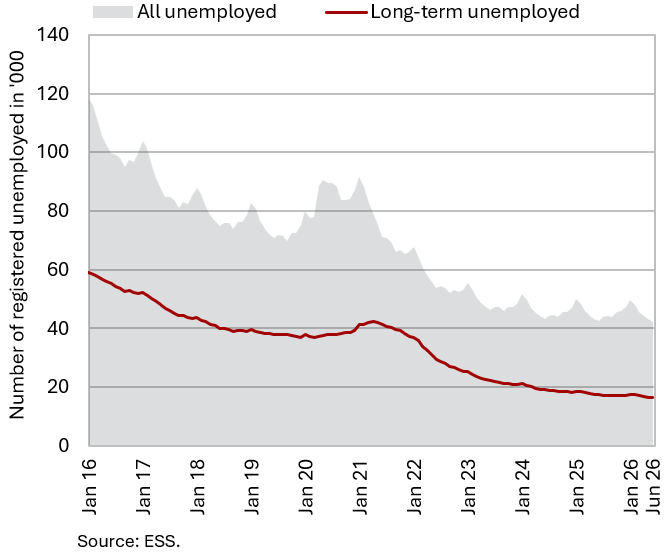
The number of registered unemployed continued to decline slightly month-on-month in June (-0.2%, seasonally adjusted) and was also lower year-on-year (-0.4%). According to the original data, 42,245 people were unemployed at the end of June, 1.9% fewer than at the end of May and the lowest number recorded since 1990. The year-on-year decline in the number of long-term unemployed and unemployed persons aged over 50 continued (down 5.8% and 3.8% respectively). The number of unemployed young people (aged 15–29), which has been increasing year-on-year since October 2024, was 3.2% higher than a year earlier in June. However, the pace of year-on-year growth has gradually moderated since the beginning of the year. There were 8,621 unemployed young people in June. This may be attributable, at least in part, to the increase in the size of cohorts entering the labour market (between 2023 and 2025, the number of residents aged 15–29 increased by ten thousand or 3.3%), while demand for labour has weakened. In the first six months of the year, the number of unemployed persons was 0.4% lower year-on-year.
Electricity consumption by consumer group, June 2026
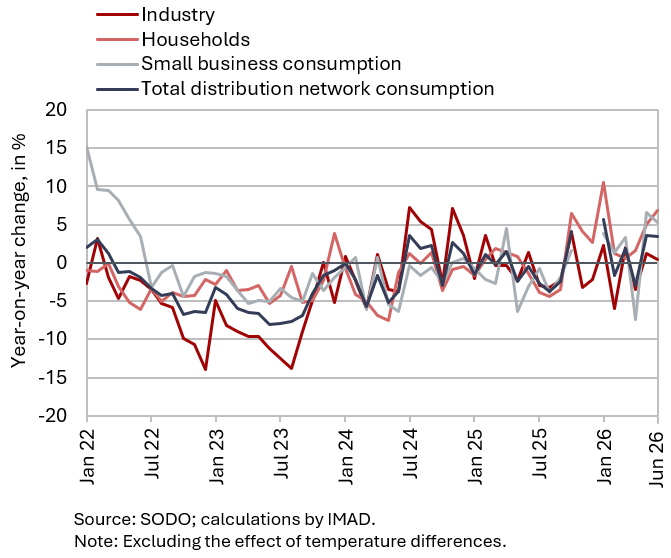
Electricity consumption in the distribution network was 3.4% higher year-on-year in June, partly due to one more working day. Across the main consumer groups, industrial electricity consumption increased by 0.4%, consumption by other business users by 5.3%, and household electricity consumption by 6.8%.
Manufacturing production, May 2026
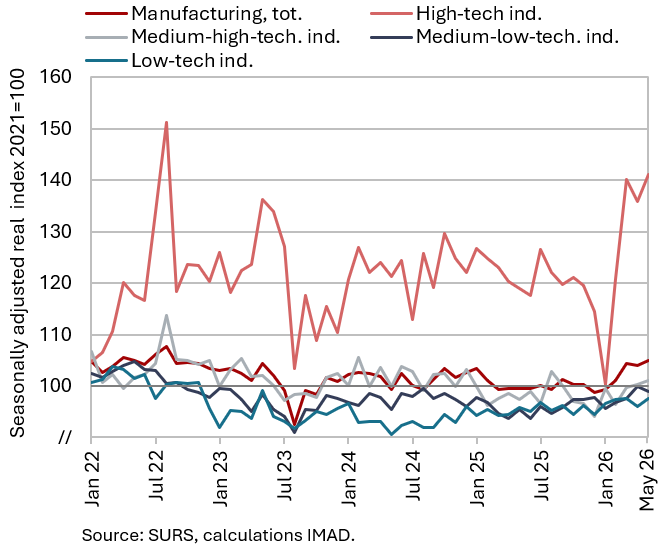
Following a temporary interruption in April, the strengthening of manufacturing output resumed in May (seasonally adjusted); in the first five months, output was 2.3% higher than in the same period last year. The month-on-month increase in May was driven by most industry groups, classified by technological intensity. On average, only output in the medium-low-technology industries declined slightly (seasonally adjusted). In the first five months, however, output in this group remained above last year’s level, mainly owing to industries that are not energy-intensive (the manufacture of fabricated metal products and the repair and installation of machinery and equipment). Output in the medium-high-technology industries showed the smallest increase compared with a year earlier, on average. In addition to lower year-on-year output in the energy-intensive chemical industry, manufacture of electrical equipment also remained lower year-on-year, having already declined in the previous year. Output in the manufacture of motor vehicles and other transport equipment, which had contracted for most of the past four years, was higher than a year earlier (partly reflecting the start of serial production of a new electric passenger car). Output also increased in most low-technology and high-technology industries.